





Introduction
Venetian masks started to be used around the 13th century when Venice was a wealthy and powerful trading city. As a result, people wore venetian carnival masks during festivals and public celebrations to cover their faces. Masks gave different classes of people the same opportunities to interact with one another without being judged or restricted.
The origins and evolution of the Venetian mask.
Venetian masks started to be used around the 13th century when Venice was a wealthy and powerful trading city. As a result, people wore venetian carnival masks during festivals and public celebrations to cover their faces. Masks gave different classes of people the same opportunities to interact with one another without being judged or restricted.
Early masks were simple and primarily used for the purpose of anonymity. They are crafted from leather, cloth and materials readily available during the period. Masks soon became an integral part of the social life in Venice, even in their basic form.
Growth in the Renaissance Period
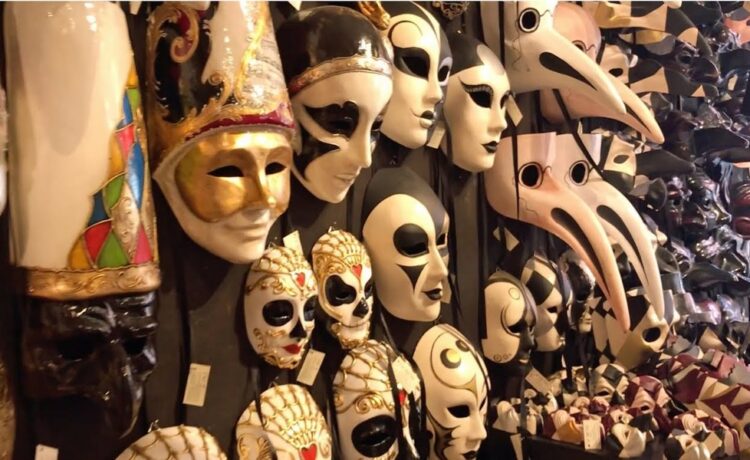
During the Renaissance period, Venetian masks grew much more elaborate. The more wealthy and cultured Venice became, the more the art of mask-making became an honoured art. Beginners and artisans started making masks by using paper mache, gold leaf, feathers, jewels, and colourful paints to make luxurious masks.
The masks were an integral part of the Venice Carnival in the 17th and 18th centuries. They were worn not just at festivals, but at the theatre, gambling houses and public meetings. The masks became different types for various social functions, such as Bauta, Colombina and Moretti masks. It was the golden age of carnival masks in Venice when they were used as an emblem of grace, liberty and fun.
The deterioration of tradition.
Towards the end of the 18th century, Venetian masks fell out of favour. The decline of the Venetian Republic and the political changes that occurred after that led to a decrease in the significance of the carnival traditions. Authorities also imposed mask restrictions – sometimes there was a connection between anonymity and crime and social disorder.
Consequently, the craft of making masks began to fade and the big carnival parties began to diminish. Venetian masks continued to exist primarily as symbolic cultural articles and were not widely adopted as dress masks.
The revival, in modern times.
In the late 20th century, the carnival masks started to be revived as the Venice Carnival was made official again as a major cultural event. Artists and craftsmen worked on maintaining traditional methods of mask-making with the addition of contemporary designs and materials.
Today, Venetian masks are admired worldwide for their artistic beauty and cultural significance. Modern masks are generally more decorative and stylish than those of the past, with glitter, crystals, lace and elaborate forms. Original styles are still in use but modern designers are still experimenting with some creative new looks.
Feedback on Global Fashion and Entertainment.
Today the masks of Venice have been a source of inspiration for fashion, the theatre, film and party culture in many parts of the world. In many countries, masquerade parties based on the Venetian style are in fashion. Popular for designers to use Venetian-style masks on fashion shows or in stage performances to add mystery and elegance.
The carnival masks have also grown in popularity and are now globally known symbols of celebration and art thanks to social media and tourism.